
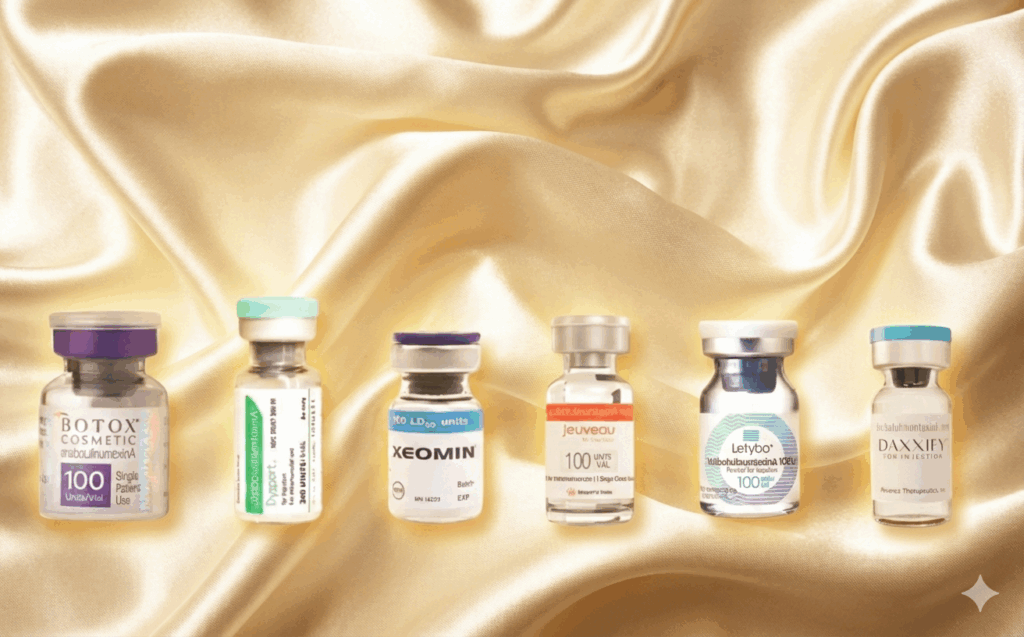
Botox, Dysport, Xeromin, Daxxify, Jeuveau, and now Letybo – The increasingly diverse landscape of cosmetic neurotoxins
The world of aesthetic medicine is constantly evolving, particularly when it comes to neurotoxins, the popular injectable treatments used to temporarily smooth wrinkles and fine lines.
While Botox remains the household name, the growing lineup offers patients and providers a variety of options. In this post, we’ll go over the key similarities and differences between Botox, Dysport, Xeomin, Daxxify, Jeuveau, and the newest contender, Letybo.
Same mechanism of action
Fundamentally, all these products are Type-A botulinum toxins, protein molecules produced by the Clostridium botulinum bacteria. They all work by targeting the neuromuscular junction, the connection between nerves and muscles. That’s why we also call them neuromodulators. The toxin blocks the release of acetylcholine, a neurotransmitter that normally causes the muscles to contract, thereby relaxing the muscles. With the muscles relaxed, we prevent the formation of “dynamic” wrinkles.
What’s the difference?
While the mechanism is similar, the products differ slightly in their manufacturing process, molecular structure, molecular size, and stabilizers added. These subtle differences in turn affect how soon they start working, how long their effects last, how wide the toxins spread from the injection site, and how the patients feel.
Botox
Active toxin: OnabotulinumtoxinA
Manufacturer: Allergan
FDA approved (for cosmetic use): 2002
Known for: Wide range of use, predictable results
Botox is the OG of neurotoxins. It’s been on the market for the longest time, with great brand recognition. It has accumulated the largest amount of clinical experience for not only treating wrinkles and lines all over the face, but also for headaches, teeth grinding, muscle spasms, and even excessive sweating. The effect of Botox usually appears within 3-5 days and lasts 3-4 months. Botox is the “gold standard” by which all other neurotoxins are compared against.
Dysport
Active toxin: AbobotulinumtoxinA
Manufacturer: Galderma
FDA approved: 2009
Known for: Quicker onset, wider spread
The concentration of toxin in Dysport is more dilute than Botox, so it tends to spread more from the injection site. This can be advantageous for treating larger areas such as the forehead. The onset is also a little bit faster than Botox (2-3 days vs. 3-5 days).
Xeomin
Active toxin: IncobotulinumtoxinA
Manufacturer: Merz
FDA approved: 2011
Known for: Pure toxin with no extra protein
Often called the “naked neurotoxin”, Xeomin is a purified formulation containing only the active botulinum toxin, without any complexing proteins. The size of the Xeomin molecule (150 kDa) is about one-sixth of Botox (900 kDa). This purification theoretically reduces the risk of antibody formation, which can contribute to allergic reactions and drug resistance over time. However it may also make the effect wear off a little faster.
Jeuveau
Active toxin: PrabotulinumtoxinA
Manufacturer: Evolus
FDA approved: 2019
Known for: Quicker onset, limited spread
Jeuveau was nicknamed “Newtox” when it first came onto the US market. This toxin, while structurally similar to Botox, is produced by a strain of bacteria only found in Korea and extracted using a vacuum-drying technology which helps preserve purity. Some patients find Jeuveau to have a stronger potency for stubborn muscles. Others report its duration is somewhat shortened compared to Botox (2-3 months vs. 3-4 months).
Daxxify
Active toxin: DaxibotulinumtoxinA
Manufacturer: Revance
FDA approved: 2022
Known for: Quicker onset, longer duration, peptide stabilizer
Daxxify is made from a proprietary technology that uses a peptide (short chain of amino acids) instead of proteins to stabilize the toxin. The result is a quicker onset and longer duration of action. The effect of Daxxify usually appears within 1-2 days and can last up to 6 months. Some patients also report an improvement in skin texture, or the “glow” effect, possibly associated with the peptide.
Letybo
Active toxin: LetibotulinumtoxinA
Manufacturer: Hugel
FDA approved: 2024
Known for: Quick onset, limited spread
Letybo is the newest guest to the party and another contender from Korea. The manufacturing process also emphasizes purity and reduction of accessory proteins. The more controlled spread makes Letybo suitable for precise targeting of high movement areas. But there hasn’t been enough real market experiences to clearly differentiate Letybo from the competitors.
Choosing the right neurotoxin
Quarter century since Botox was first approved for cosmetic use, neurotoxins are now a very mature treatment modality in the field of esthetic medicine. As the field continues to innovate, we expect more brands to enter the market in the coming years, offering more options for providers and patients alike.
If we just look at the clinical efficacy, the different brands of neurotoxins are considered equivalent. No head-to-head clinical trials have shown superiority of one over another for the purpose of reducing and preventing wrinkles.
An experienced injector can probably use any of the available neurotoxins to achieve the desired look by carefully adjusting the dosage, location, and technique of injection. However, we can also leverage the subtle differentiating characteristics of each toxin to optimize the treatment plan for each patient.
Ultimately, the choice is a collaborative decision between the injector and the patient. The injector will assess the patient’s medical history, skin type, and target area and recommend the toxin that would work the best. The patient may also voice preferences based on the timing of follow up doses and pricing.
Curious about neurotoxins and how they may help improve your appearance? We at Lively Medical Spa are happy to answer your questions. Schedule a complimentary consultation with one of our licensed providers today.